Industries
Food facility cleaning in Salinas
Food safety cleaning for Salinas plants: offices, crew rooms, corridors and dock floors cleaned to your written sanitation rules and timed to fit your shift changes.
Food safety reaches past the production floor
A Salinas food plant is judged by its production rooms, but people, carts and pallets reach those rooms through everything around them. Workers change in the locker room, eat in the break room and walk the corridors to the line. Product arrives across the dock and waits on the warehouse floor. When those spaces are kept clean on a set schedule, the whole building backs up the work your sanitation program does on the line.
Food facility cleaning covers that ring of support space for produce processors, packaged-food plants and the coolers and warehouses that serve them, so the building stays as orderly as the product inside it.
The rooms our crews clean around production
Every visit works from a written room list set at the walkthrough:
- Offices and entries: reception, quality and shipping offices, and the doors where visitors and drivers come in
- Restrooms: fixtures cleaned, floors mopped, and soap, towels and paper restocked
- Locker rooms: benches, lockers, showers and drains cleaned before each shift change
- Break rooms: tables, counters, sinks, microwaves and refrigerator handles wiped down
- Corridors: hallways and walkways leading to the production doors swept and mopped
- Warehouse and dock floors: swept and scrubbed, with debris cleared from dock doors and staging lanes
Heavier floor work on the slab joins the plan through concrete floor cleaning, refrigerated rooms through cold storage cleaning, and dock aprons through loading dock cleaning.
Your written sanitation rules, followed on every visit
Your plant already has rules for how the building is cleaned, and our crews work inside them. Before the first visit, a supervisor goes through your written sanitation and food safety procedures with your team and builds the cleaning plan from them, room by room.
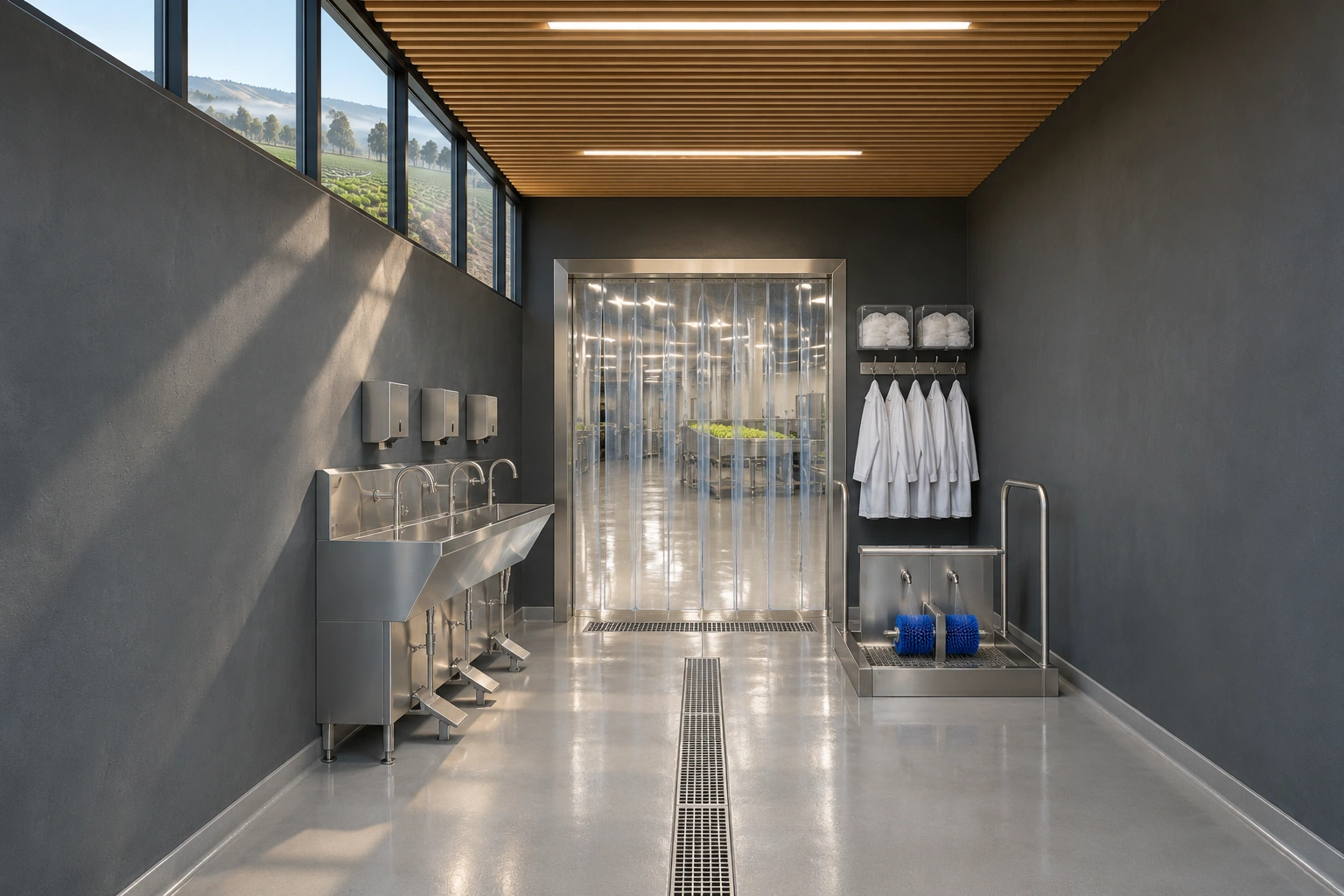
That covers the chemicals on your approved list, the color-coded tools assigned to each zone, the hygiene steps and protective clothing your rules require at each door, and the sign-in process for anyone entering the building. Tools used in restrooms stay in restrooms, and tools for the corridors near production stay there. Supervisors return for quality inspections to check that the plan is being followed the way it was written.
What 21 CFR 117.35 asks of a food facility
The FDA’s sanitary operations rule, 21 CFR 117.35, is part of the FSMA rule for human food. It requires a facility to clean food-contact surfaces as often as needed to protect against allergen cross-contact and contamination, and to clean the non-food-contact surfaces of equipment in a manner and as often as needed for the same purpose.
Your sanitation program decides how the plant meets that rule. Our crews can also clean and sanitize the lines and the equipment that touches food after each line is shut down and handed over for cleaning, or leave that work with your sanitation team if it already owns it. Either way, the offices, crew rooms, corridors and dock floors around it run on a written schedule built from your procedures and the chemicals your plant has approved.
Scheduled around shifts, sanitation windows and audits
Plants run on tight calendars, and cleaning fits into yours. Locker rooms and break rooms are turned around while one shift hands over to the next, so the incoming crew finds clean benches, stocked dispensers and wiped tables. Our visits are timed around your sanitation shift, keeping both teams out of each other’s way, and warehouse floors are scrubbed when the lanes are clear of forklift traffic.
Ahead of a scheduled audit or customer visit, extra cleaning of the support rooms, corridors and docks can be booked for the dates your team sets. Busy plants add a day porter to restock restrooms and handle spills during the shift. Plant types have their own pages too: food processing facility cleaning for produce processors and packers, and food manufacturing cleaning for packaged-food and ingredient plants.
Request a quote for your food facility
It starts with a free walkthrough. We tour the plant with your sanitation or facilities lead, note every room on the list, learn your rules and shift times, then put each task and its frequency into a written quote.
Every crew member is background-checked before starting, and the company holds insurance, bonding and workers’ compensation coverage. Your quality or purchasing team receives a certificate of insurance before the first visit. Request a quote to set up your walkthrough.
Common questions
Which areas of a food plant do you clean?
The support space around production: offices, entries, restrooms, locker rooms, break rooms, corridors, and warehouse and dock floors, each on the frequency set in your written cleaning plan. Line and food-contact sanitation can be added as well, done to your written sanitation procedures, or left with your own sanitation team if it already handles that work.
Will your crews use our approved chemicals and color-coded tools?
Yes. The plan is built from your written procedures, so crews use the chemicals on your list and keep each color-coded tool in the zone it belongs to.
Do you clean locker rooms and break rooms between shifts?
Yes. Locker rooms and break rooms are cleaned in the gap between shifts, so the next crew walks into clean, stocked rooms.
Can we book extra cleaning before an audit?
Yes. Extra visits for the support rooms, corridors and docks can be booked for the days leading up to an audit or customer visit.
Do your crews follow our sign-in and hygiene steps?
Yes. Crews sign in the way your plant requires and follow the hand washing and protective clothing rules posted for each area.
Need cleaning timed to your Salinas shifts?
Describe the facility, its busy areas and the cleaning days you want, and we draft a quote.